







 PERatio
Filter
Price / Earnings Ratio Filter (PERatio)
Find low P/E stocks, or high P/E stocks, in real time, with Trade Ideas Streaming Alerts (Scanner) and Top Lists (Screeners). The Price/Earnings (P/E) ratio compares a company's share price with its earnings per share, a common read on valuation.
Watch the market turn, stock by stock.
Free account, just an email. No card. Live access for a limited time.

Seeing a value stock start to move as it happens helps active traders. The Price / Earnings Ratio filter value changes once a day, so Streaming Alerts apply it the moment each alert fires: you see only the stocks that pass it, while they are moving.
How Trade Ideas finds it: set the minimum value to 10 to see only stocks with a P/E Ratio of 10/1. See Trade Ideas plans and pricing to run it live.
How the Price / Earnings Ratio filter works
The Price/Earnings (P/E) ratio, also known as the earnings multiple, is a fundamental financial metric used to assess the valuation of a company's stock in relation to its earnings. It compares the current market price of a company's stock to its earnings per share (EPS), providing insight into how much investors are willing to pay for each unit of earnings generated by the company.
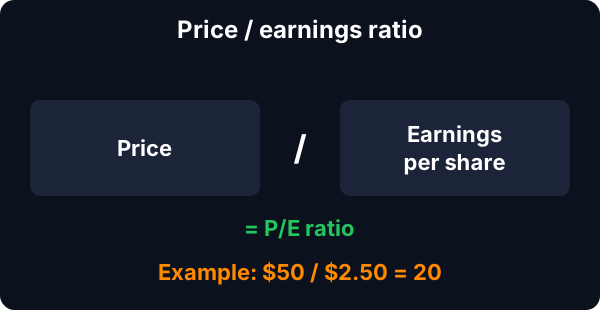
Calculation: The formula for calculating the P/E ratio is straightforward: Stock Price / Earnings Per Share = P/E Ratio.
Key point
Interpretation: A high P/E ratio suggests that investors are willing to pay a premium for each unit of earnings, indicating optimism about the company's future growth prospects. A low P/E ratio may indicate that the company's stock is undervalued relative to its earnings, potentially presenting a buying opportunity. The P/E ratio can vary significantly across industries and companies, so it's essential to compare a company's P/E ratio to its peers or industry averages for better context.
Price / Earnings Ratio filter settings
Configuring the "Price Earning Ratio" filter is simple and can be done within the Window Specific Filters Tab of the Configuration Window in your Alert or Top List (Screener) window.
Here's how to set up the filter in your configuration window:
- Set the minimum value to 10 to see only stocks with a P/E Ratio of 10/1.

Using the Price Earning Ratio Filter
The "Price Earning Ratio" filter can be used in various trading strategies, including:
- Value Investing: Identify stocks with low P/E ratios relative to their peers, industry averages, or historical norms. Take long positions in undervalued stocks, anticipating potential price appreciation as the market reevaluates their earnings potential.
- Growth Investing: Look for stocks with high P/E ratios that reflect market optimism about future earnings growth. Take long positions in high-growth stocks with sustainable growth prospects, expecting continued earnings expansion to justify their valuation multiples.
- Contrarian Strategy: Identify stocks with significantly high or low P/E ratios compared to historical levels, industry averages, or market sentiment. Take contrarian positions by buying undervalued stocks with low P/E ratios when market sentiment is pessimistic or selling overvalued stocks with high P/E ratios when market sentiment is overly optimistic.
Filters to combine with Price / Earnings Ratio
Categories
FAQ
Which stocks have a low P/E ratio?
Add the Price / Earnings Ratio filter (PERatio) to a Trade Ideas Streaming Alerts or Top List (Screener) window. Set the minimum value to 10 to see only stocks with a P/E Ratio of 10/1.
What is the Price / Earnings Ratio filter?
The Price/Earnings (P/E) ratio compares a company's share price with its earnings per share, a common read on valuation.
How do I screen stocks by P/E ratio?
Use the Price / Earnings Ratio filter (PERatio) in Trade Ideas Streaming Alerts and Top Lists to find low P/E stocks, or high P/E stocks. The Price/Earnings (P/E) ratio compares a company's share price with its earnings per share, a common read on valuation.